
Investor visa influx puts New Zealand luxury property in focus
New Zealand’s revamped investor visa settings are drawing a much larger pool of wealthy overseas applicants, bringing billions of dollars in committed capital and renewed attention to premium property markets such as Queenstown.
More than 700 wealthy foreigners have applied under the scheme in the past 14 months, compared with 115 during the previous three years. The increase followed changes that relaxed rules covering property purchases, investment requirements and how much time applicants must spend in New Zealand.
Under one pathway, applicants must invest at least NZ$5 million in local funds, companies or charities within three years. A further 127 people have applied through another route requiring NZ$10 million to be invested over five years in passive assets such as bonds.
Capital commitments rise
Since the investor visa scheme was overhauled in April 2025, applicants from North America, Europe and Asia have committed NZ$24.8 billion at the NZ$5 million or NZ$10 million investment levels.
That compares with NZ$14.8 billion of foreign investment recorded in the first quarter of this year, according to figures cited in the source report.
Americans account for 277 applications, with Californians particularly prominent. Venture capital investor Lachlan Nixon said 30 visa holders supplied 40 per cent of a recent NZ$27 million fundraising for high-growth New Zealand companies.
The capital has also reached local businesses. Beneficiaries cited in the report include critical minerals company Zethos, seed-oil protein business Miruku and magnesium miner Aspiring Materials.
Prime Minister Christopher Luxon has said the policy is intended to attract foreign investment and help address New Zealand’s loss of skilled people overseas. He has also pointed to the potential for incoming investors to bring knowledge and business experience as well as capital.
Queenstown property draws attention
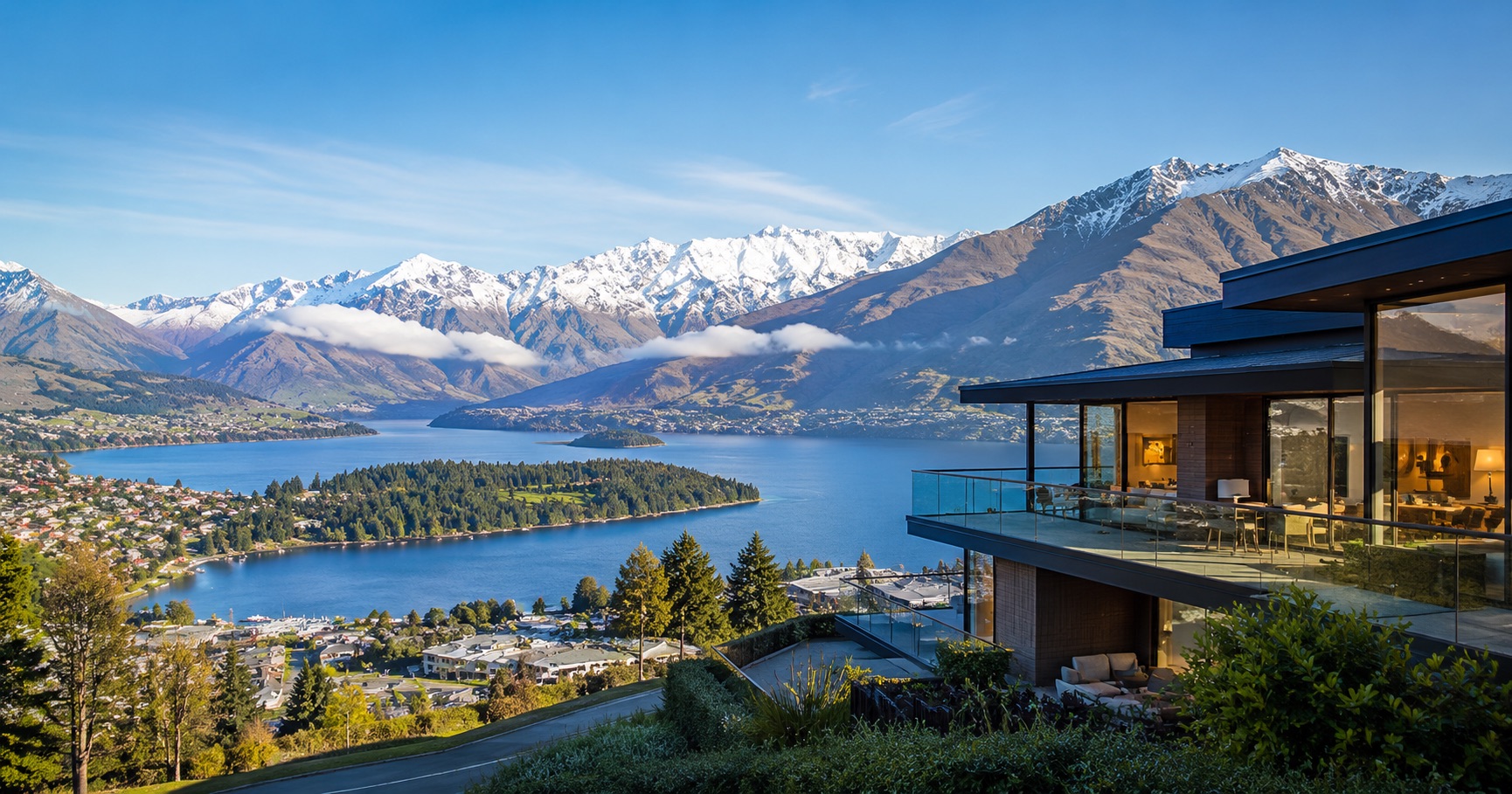
Queenstown has become a focal point for many applicants. Its median property price is NZ$1.8 million, twice the national average, according to Cotality.
The visa rules place a higher threshold on property purchases by participants: they may only buy properties worth more than NZ$5 million. The restriction is intended to limit the scheme’s impact on the wider housing market.
Property agent Jo Eddington spent three weeks in June meeting potential applicants in San Diego and Beverly Hills. She said many had already visited Queenstown.
The resort town, with a population of about 50,000, receives millions of tourists each year. Authorities are also planning a NZ$250 million cable-car gondola linking the airport with nearby hubs to help ease congestion.
For developers and investors, the combination of new capital and a strict NZ$5 million property threshold points to potential demand being concentrated at the upper end of the market rather than across mainstream housing.
Questions remain over the scheme
Not everyone is convinced the programme will deliver broad benefits. Simplicity managing director Sam Stubbs argued that participants should be meaningfully invested in New Zealand rather than receive special treatment for relatively small venture-capital commitments.
Rocket Lab founder Peter Beck also argued that the minimum investment threshold was too low.
Tax settings may affect how long some successful applicants choose to remain in New Zealand. Santa Barbara venture capital investor Courtney Andelman, who obtained a visa last year, said her family could face New Zealand tax on global earnings if they spent more than 183 days in the country in a year.
Andelman also said she was interested in settling in a smaller South Island city such as Nelson, where her investments might have greater local impact, but found few properties above the NZ$5 million threshold.
The scheme therefore presents a mix of opportunities and constraints: substantial offshore capital has been committed, while property rules, tax treatment and questions about the depth of investors’ local commitment continue to shape how that capital may be deployed.
SOURCE ATTRIBUTION:
Based on reporting by the Financial Times.