Auckland housing reforms offer lessons for urban supply
Auckland’s decade-long push to allow denser housing has materially increased the city’s dwelling stock and reduced the prominence of housing shortages, offering a case study for other cities wrestling with affordability and constrained supply.
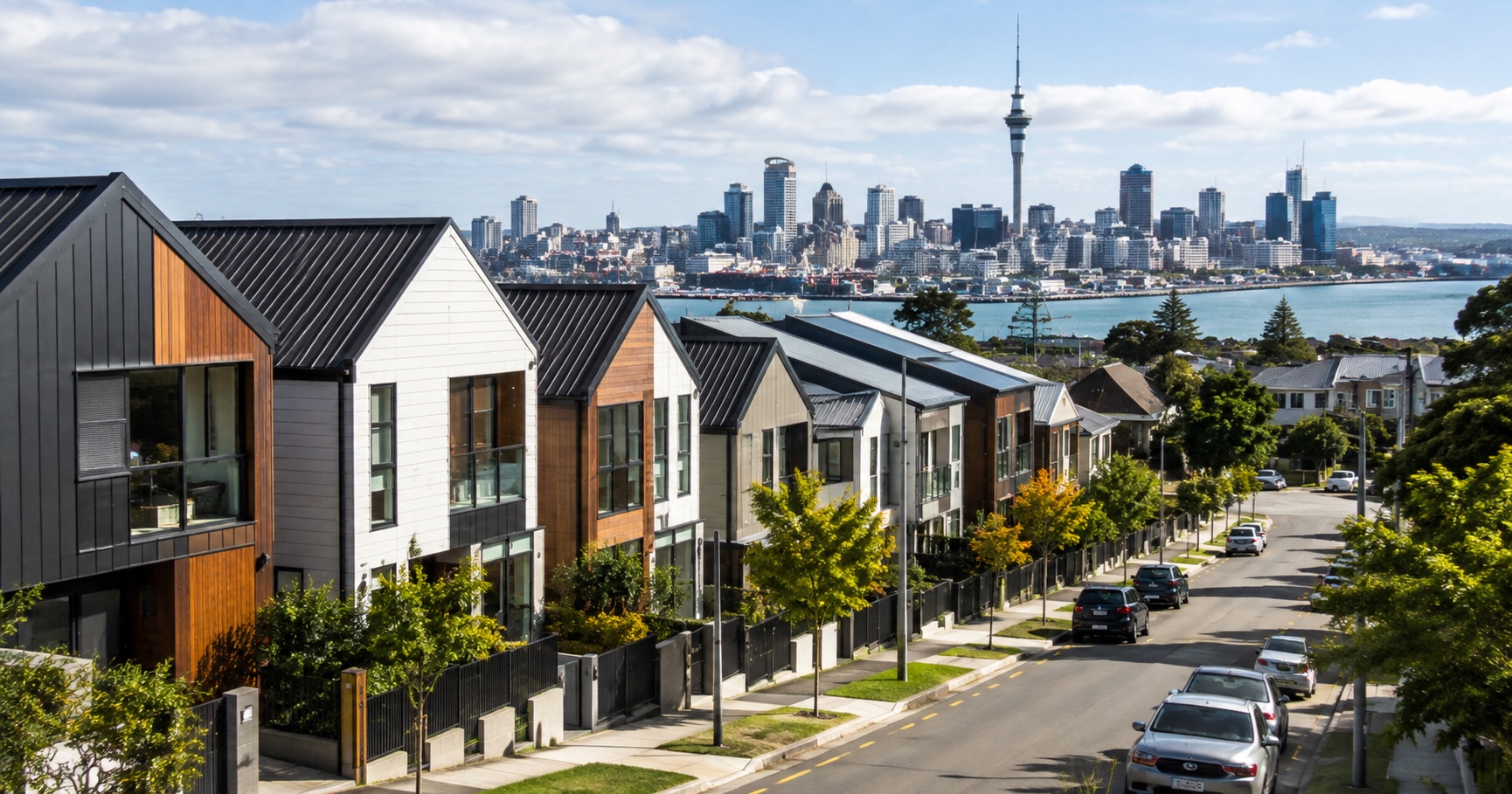
The city’s population increased from 1.3 million in 2010 to 1.8 million in 2025. Over the past decade, Auckland rezoned about 75 per cent of its residential land, enabling many traditional single-storey homes to be replaced by taller, narrower terraced housing and townhouses.
The policy shift followed a period of strong population growth and housing pressure. According to the report, immigration had risen as New Zealand’s economy strengthened, while returning New Zealanders and migrants from China and India added to demand for homes.
More homes from existing urban land
Auckland’s Unitary Plan envisaged a potential 2.1 million new dwellings. Ryan Greenaway-McGrevy, an associate professor of economics at the University of Auckland, said the strategy was designed to make the city more compact.
A 2025 policy paper cited in the report found Auckland’s housing stock had reached 618,849 units after a period of heavy construction. That was 101,000 more homes than a decade earlier, representing a 19.5 per cent increase.
The physical change has been particularly visible in established suburbs. Estate agent Graham Wall said some sites that previously held a single large house now accommodate as many as 14 townhouses.
Kelvin Davidson, chief economist at property data company Cotality, said one of the most significant changes was that housing “shortage” was no longer a term commonly heard in Auckland.
Planning Institute of Australia head of policy Nicole Bennetts said urban economists had examined Auckland’s experience and found the reforms successful in increasing housing numbers.
Prices and rents shift as supply expands
The expansion in supply has coincided with weaker house prices in Auckland. The city’s median house value is just over NZ$1 million ($1.4 million) and has lost about a quarter of its value over the period cited in the report, slightly more than the national decline.
Lower prices can improve access for buyers, although the report also noted that some developments have multiple similar homes remaining unsold.
Rental trends provide another point of comparison. Rents in other North Island cities rose by as much as 23 per cent more than Auckland between 2016 and 2024, based on calculations from Greenaway-McGrevy and Yun So.
Development trade-offs remain
Auckland’s experience has not been without costs. Residents in some suburbs have raised concerns about congestion, construction noise, disruption and increased building heights close to neighbouring properties.
Independent economist Tim Helm cautioned against attributing the post-2016 building surge entirely to the Unitary Plan, arguing that some of the increase may have reflected an already stretched housing market catching up with rapid population growth.
Further intensification is planned around transport corridors, with potential new dwelling capacity set to increase from 1.2 million to between 1.4 million and 1.6 million.
For New Zealand developers and property investors, Auckland’s experience highlights how planning rules can reshape development capacity, housing form and market supply over time. It also shows that large-scale rezoning can create redevelopment opportunities while bringing infrastructure, neighbourhood and market-absorption considerations.
SOURCE ATTRIBUTION:
Based on reporting by Financial Times, published 25 August 2026. Source: ft.com